Groundbreaking call in Kristiansand: Unmanned vessel "Reach Remote 1" at the quay

January 7, 2026

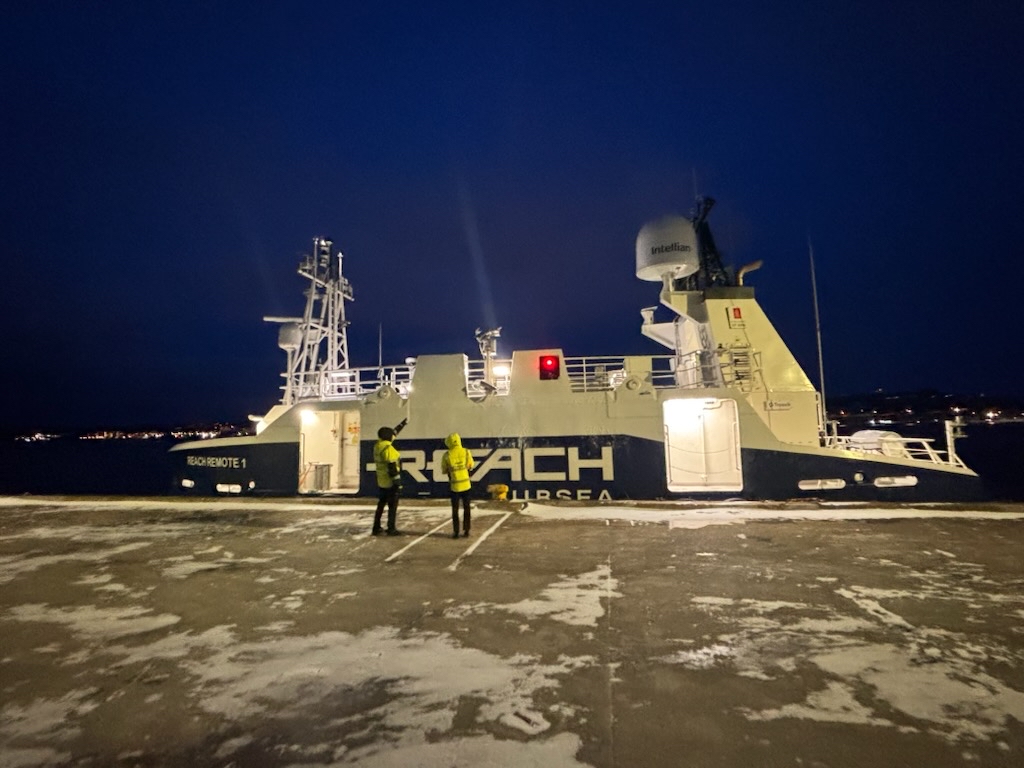
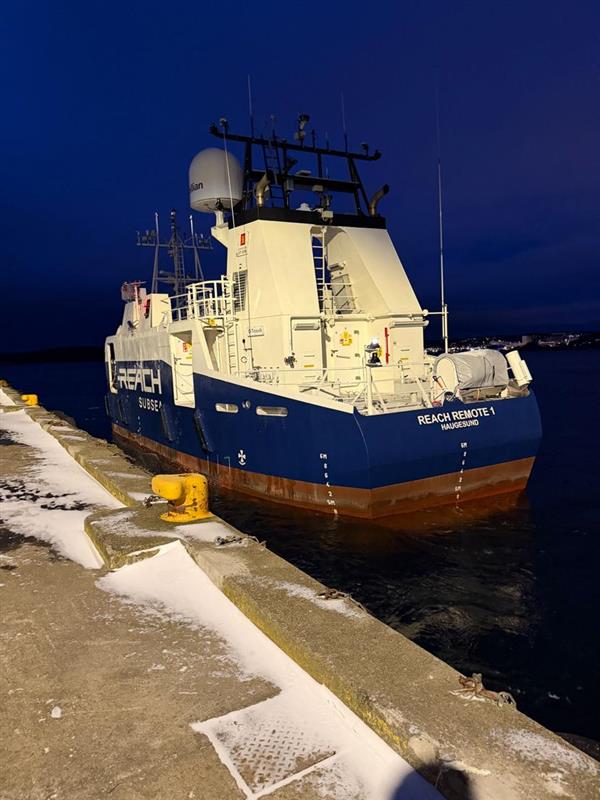
The unmanned vessel Reach Remote 1 arrived at the Port of Kristiansand early this morning and is moored at pier 16 for a short stay. The arrival marks an important moment for both the port and the Norwegian maritime industry, and shows how new technology is being put into practice in operational ports.

A vessel without a crew – controlled from shore

Reach Remote 1 is an unmanned surface vessel (USV) developed for remotely controlled and partially autonomous operations. The vessel is designed for use in subsea and offshore operations, including inspection, surveying and work with remotely operated vehicles (ROVs).

The ship is not operated from the bridge on board, but is controlled from shore via a remote operations center. This represents a clear technological shift in the maritime sector, with the potential for increased safety, lower emissions and more cost-effective operations.

Mooring and short stay in the harbor

Although the vessel is unmanned during the voyage, the call is carried out according to established procedures. Personnel have gone on board to set out moorings, and the Port of Kristiansand has assisted with mooring from shore in the usual manner. The stay in the port is short, lasting a few hours before the vessel sails on.

Part of a growing fleet

Reach Subsea states that the sister ship Reach Remote 2 is already in operation in Australia, and that the company initiated a scaling program in the fall with the order for Reach Remote 3 and 4, which are scheduled to be delivered in 2027.

According to the shipping company, this is an important step in the development of the company's operating model. They point out that remotely controlled and unmanned vessels will play an increasingly important role in the maritime industries of the future, and that this technology represents a clear crossroads for the industry.

Future-oriented maritime activities

Reach Remote 1 has been developed in collaboration between several leading Norwegian technology environments and is considered a pioneering project in the field of remotely controlled and autonomous vessels. The solution has already received significant international attention, both as a technological innovation and as a contribution to more sustainable maritime operations.

The fact that the Port of Kristiansand is a port of call for this type of vessel emphasizes the port's role as a facilitator for new technology and future-oriented maritime activities - and as an active part of developments in the maritime industry.